


Why sukuks surged 60% and why investors like you should care
Global ESG sukuk issuance rose more than 60% in 2025. Learn what sustainable sukuk are, how they differ from bonds, and what the growth means for investors.

Download the Tabadulat app and start building your Shariah-compliant portfolio in minutes.






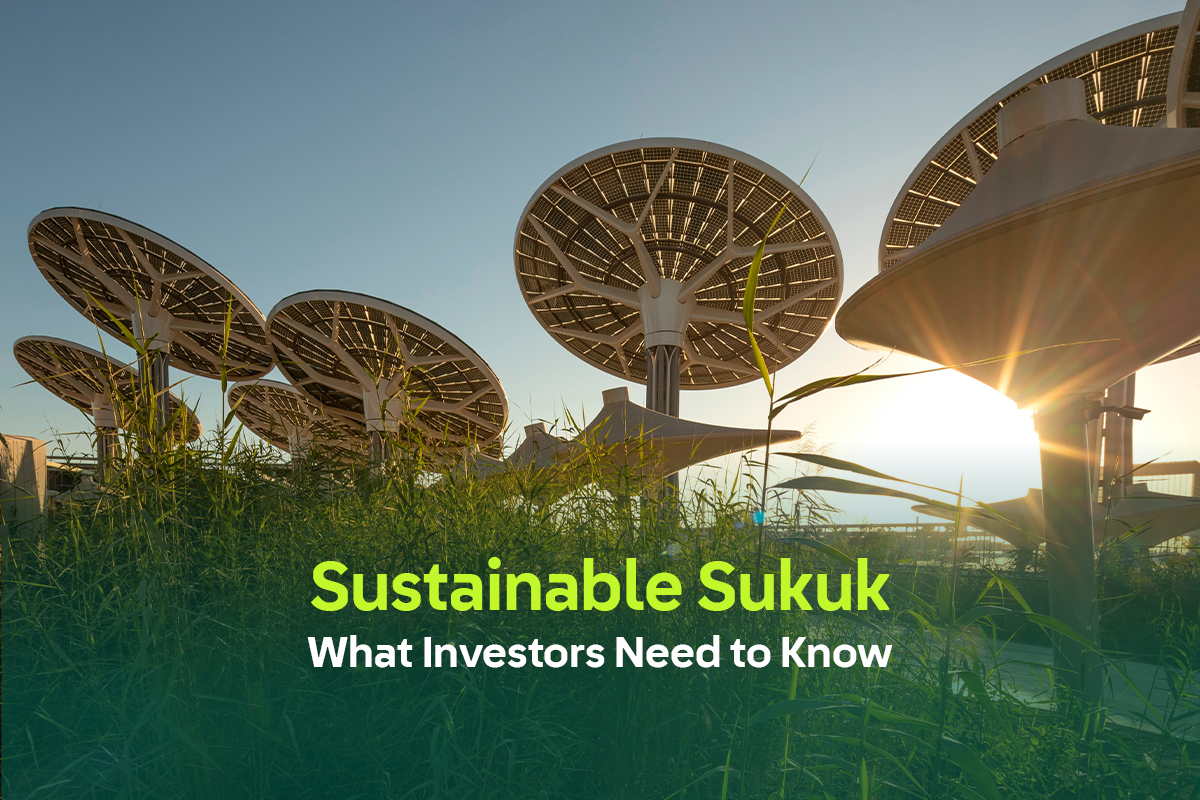
What if you could generate financial returns from your investments while also protecting the environment and curbing global warming? This is precisely what you can achieve by embracing sustainable or "green" investments. A key example is sustainable sukuk, which have seen remarkable growth in recent years.
ESG sukuk continued to gain momentum in 2025, particularly in emerging markets, reflecting growing interest in sustainable Islamic finance. According to Fitch Ratings, global ESG sukuk issuance rose by more than 60% to $18.5 billion, with Saudi Arabia accounting for 33% of the total, followed by Malaysia (28%), the UAE (19%), and Indonesia (9%).
This growth also expanded the overall market, with outstanding ESG sukuk reaching $58 billion by the end of 2025, up around 30% from a year earlier. US dollar-denominated sukuk accounted for 66% of the outstanding total.
Sustainable sukuk are Shariah-compliant, interest-free financial certificates whose proceeds are earmarked to fund environmentally sustainable or socially responsible projects.
Sukuk is the plural form of the Arabic word “sakk”. It is a Shariah-compliant financial instrument (the Islamic equivalent of a bond) that provides exposure to income-generating assets or projects through structured certificates. Unlike conventional bonds, sukuk are structured around Shariah-compliant assets or business activities rather than interest-based lending. How investors receive payments depends on the sukuk structure, with many sukuk offering fixed periodic distributions, while others provide variable returns linked to the underlying arrangement.
For example, a company might issue sukuk to finance a solar power plant. Investors could then receive a share of the income generated by the plant, rather than interest payments on a traditional loan.
Sukuk contribute significantly to achieving the Sustainable Development Goals through their role in financing development projects, diversifying funding sources, and promoting social responsibility.
Following Shariah principles also gives investors a clearer picture of where their money goes and how it generates returns. Sukuk are structured around identifiable assets or business activities, rather than interest-based lending. Investors can review how their money will be used, how returns are calculated, and what risks are involved. This makes it easier for them to understand what they're investing in and decide whether it aligns with their financial goals and values.
For Saudi Arabia, sustainable sukuk are more than a way to raise money. They help banks and companies attract investment while supporting the country's broader economic development and sustainability goals under Vision 2030.
In 2026, Al Rajhi Bank raised $1.6 billion through two social sukuk issuances: $1 billion in January and another $600 million in September. Alinma Bank also issued $500 million in sustainable sukuk in June. Social sukuk are designed to support eligible social initiatives, while sustainable sukuk can finance both environmental and social projects. These deals show how Saudi financial institutions are using different types of Shariah-compliant financing to attract capital from local and international investors while strengthening their capital positions.
For issuers, the benefit is access to a wider pool of investors and additional funding sources. For investors, these sukuk offer an opportunity to earn Shariah-compliant returns while supporting eligible environmental or social activities, depending on the classification and terms of each issuance.
Beyond banking, green sukuk, which specifically target environmental projects, can help finance renewable energy, cleaner public transportation, water treatment, recycling facilities, green buildings, sustainable agriculture, biodiversity conservation, and projects that help communities adapt to climate change.
What makes these instruments particularly relevant to investors is the ability to understand how the funds are intended to be used, alongside the expected returns and associated risks.
Companies such as electricity providers, renewable energy developers, and real estate businesses played a major role in sustainable sukuk issuance in 2025, accounting for nearly 60% of the total. These businesses can use sukuk to finance projects such as solar power plants, cleaner electricity infrastructure, and energy-efficient buildings.
Banks and other financial institutions represented around 30% of total issuance, while government-backed organisations, such as public utilities and infrastructure companies, accounted for 22%. Their growing involvement shows how sustainable sukuk are being used by different types of organisations to raise funds for environmental and social initiatives.
This growth reflects increasing interest from government-backed electricity and infrastructure companies, which can use sustainable sukuk to finance projects such as upgrading power networks and developing cleaner energy infrastructure. One example is Oman Electricity Transmission Company, which entered the ESG sukuk market for the first time, highlighting how these financing instruments are expanding beyond banks and into essential infrastructure sectors.
Banks, governments, development institutions, and infrastructure companies were among the leading ESG sukuk issuers in 2025, reflecting the range of institutions participating in the market.
According to LSEG's Islamic Investment Review – FY 2025, reported as released on May 19, 2026, Al Rajhi Bank led ESG sukuk issuance in 2025 with $2.7 billion, accounting for 11% of the total. Indonesia's government followed with $2.35 billion (10%), while the Islamic Development Bank issued $2.34 billion (10%). Malaysia Rail Link and PNB Merdeka Ventures were also among the leading issuers, with $2.18 billion (9%) and $1.48 billion (6%), respectively.
The inclusion of railway and property developers alongside major financial institutions illustrates the diversity of issuers participating in the ESG sukuk market. However, the purpose, structure, and risks of individual issuances vary, making it important for investors to assess each instrument on its own terms.
The growing participation of banks, governments, and infrastructure companies shows that sustainable sukuk are becoming an increasingly important way to raise funding for environmental and social projects.
This trend is expected to continue. In a report published in January 2026, Fitch Ratings, a global credit rating agency that assesses financial risks and monitors debt markets, forecast that outstanding ESG sukuk would exceed $70 billion by the end of 2026. Their share of emerging-market ESG debt issuance in US dollars rose from 18% in 2024 to around 40% in 2025.
For investors, this growth means a wider range of Shariah-compliant investment opportunities across different sectors. However, choosing a sustainable sukuk still requires looking beyond its environmental or social label to understand how the funds will be used, the expected returns, and the risks involved.
Disclaimer: This article is for educational purposes only and does not constitute financial, investment, or Shariah advice. Fees and features change, always confirm current details on each platform's official website before investing. Tabadulat Limited is regulated by the Financial Services Regulatory Authority (FSRA) of the Abu Dhabi Global Market (ADGM) to conduct Investment Business. Expected profit rate p.a. is subject to minimum term and investment. T&Cs apply. Capital at risk. Not investment advice.