


.svg)
.svg)
.svg)
.svg)
.svg)
Investing with Purpose: Aligning Halal and ESG Values


Apr 1, 2026
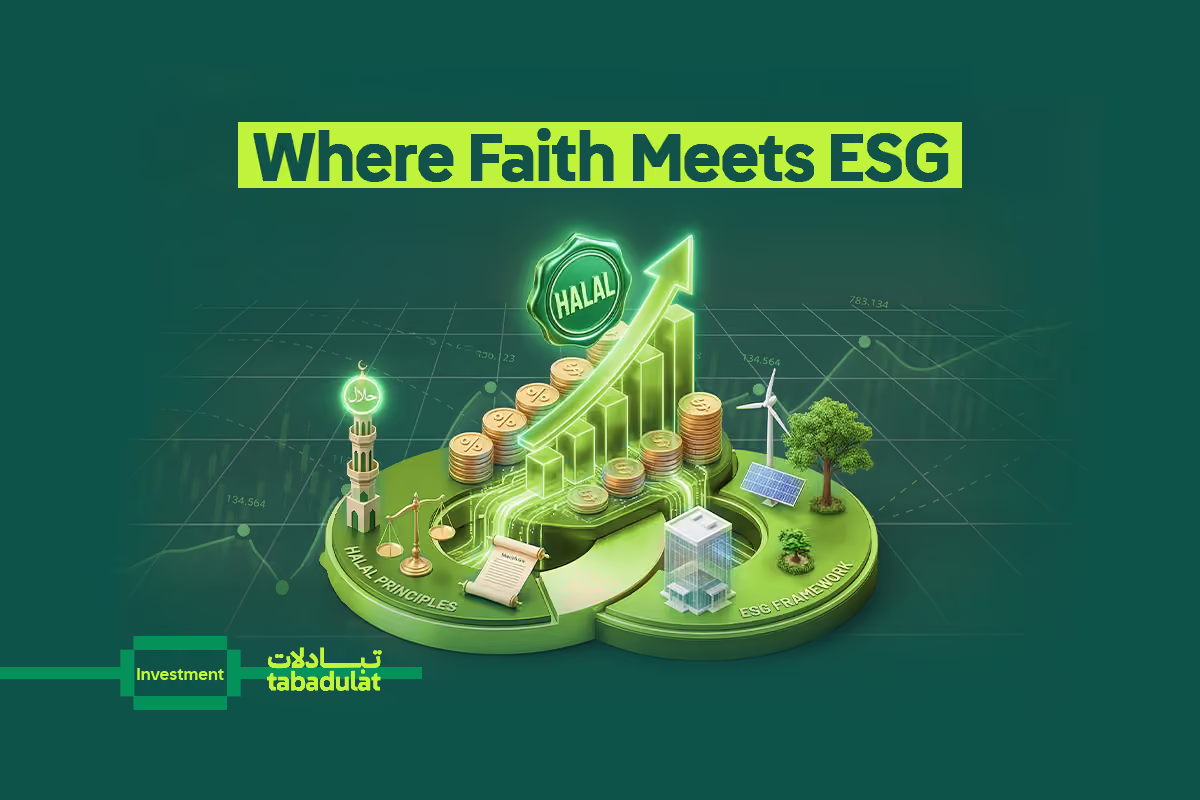
Modern investing isn’t just about financial returns; it’s about responsibility, ethics, and creating positive impact. For Muslim investors, aligning wealth with Islamic principles is a priority. At the same time, Environmental, Social, and Governance (ESG) frameworks have become a global standard for ethical investing.
The good news? ESG principles and Islamic finance share many common values. By combining them, you can build a Halal and socially responsible portfolio. It can reflect your faith and your commitment to local communities and the environment.
Let’s explore how.
Why ESG Matters for Muslim Investors?
Islam encourages stewardship (Khilafah) over the Earth, fairness in business, and accountability in wealth management. The Qur’an reminds us:
"Do not cause corruption on the earth after it has been set in order" (Surah Al-A’raf 7:56).
This aligns closely with ESG principles:
- Environmental: Avoiding harm to nature and promoting environmental sustainability and responsible waste management.
- Social: Supporting justice, fair treatment, and local communities through ethical business practices.
- Governance: Ensuring transparency, accountability, and ethical management (corporate social responsibility - CSR).
Investors who integrate socially responsible investments into their portfolio are practicing Islam’s call for justice, fairness, and responsible stewardship.
How Islamic Principles Align With ESG?
- Environmental Responsibility
Islamic teachings emphasize protecting natural resources. Wastefulness (Israf) is prohibited, and sustainability is encouraged:
"Eat and drink, but waste not by extravagance" (Surah Al-A’raf 7:31). Investments that prioritize environmental sustainability, renewable energy, and efficient waste management resonate with this value.
- Social Justice
Islam promotes fairness, equity, and the welfare of the community. Paying zakat, avoiding riba, and ensuring workers’ rights are examples of social responsibility. ESG frameworks encourage investing in companies that respect human rights, labor standards, and community development, principles fully compatible with Shariah.
- Governance and Transparency
Islamic finance forbids deception, fraud, and excessive uncertainty (gharar). Similarly, ESG governance criteria emphasize transparency, ethical leadership, and risk management. Choosing companies with strong governance aligns both with Shariah compliance and responsible investing practices.
Building a Halal ESG Portfolio
Investing with both Halal and ESG criteria must not be complicated. Follow these steps:
- Screen for Shariah Compliance
Start by choosing companies that avoid riba, gharar, maysir, and other non-permissible industries. These include alcohol, tobacco, and conventional banking. Focus on businesses whose core operations align with Islamic principles.
- Research Ethical Practices
ESG issues, environmental sustainability, and corporate social responsibility initiatives. Choose companies with positive impact on local communities, fair labor practices, and sustainable operations.
3. Review and Reassess
Corporate practices and ethical performance can change over time. Periodically review your portfolio to ensure it continues to align with your values and Shariah principles.
The Benefits of Halal ESG Investing
Combining Halal investing with ESG principles can offer more than financial returns:
- Peace of Mind: You know your wealth is invested ethically and in line with Islamic guidance.
- Positive Impact: Your portfolio supports sustainability, social justice, and ethical business practices.
- Long-Term Stability: Companies with strong ESG policies and corporate social responsibility programs are often perceived to manage risk better, offering potential resilience for investors.
Where Faith Meets Financial Responsibility
Islam teaches wealth creation, but never at the expense of ethics, justice, or the environment. ESG frameworks provide a modern lens for identifying investments that meet these timeless values. By combining Halal principles with ESG standards, Muslim investors can grow wealth responsibly. They can support social welfare and protect the planet.
Investing with purpose becomes more than returns; it becomes an extension of your faith and a reflection of your values.
Ready to align your investments with Shariah and sustainability?
Investors interested in Shariah-screened and ESG-aligned strategies may explore further resources on:
https://tabadulat.com/blog/green-sukuk-building-a-sustainable-islamic-economy-43da8
FAQS
1. Is ESG investing Halal?
ESG investing can be Halal if it avoids riba, gharar, maysir, and non-permissible industries. It should also support ethical business practices.
2. Is ESG investing ethical?
Yes. ESG focuses on environmental protection, social responsibility, and good governance, promoting fairness and sustainability.
3. Is AI part of ESG?
AI itself isn’t ESG, but its use can impact ESG outcomes, e.g., improving sustainability, efficiency, or transparency.
4. Is ESG investing risky?
Like any investment, ESG carries market risks, but focusing on ethical, well-governed companies may reduce long-term risks.
5. What are the 4 pillars of ESG and sustainability?
Environmental, Social, Governance, and long-term Sustainability.
أحدث المقالات المنشورة
تصفح جميع المقالات

.avif)