


.svg)
.svg)
.svg)
.svg)
.svg)
How Zakat Applies to Gold ETFs in Modern Islamic Investing
Gold ETFs make investing in gold easier, but do they require zakat? This guide explains whether Gold ETFs are halal, how zakat applies to them, the nisab threshold, and a simple step-by-step method to calculate the 2.5% zakat on your gold ETF investments.


Mar 10, 2026
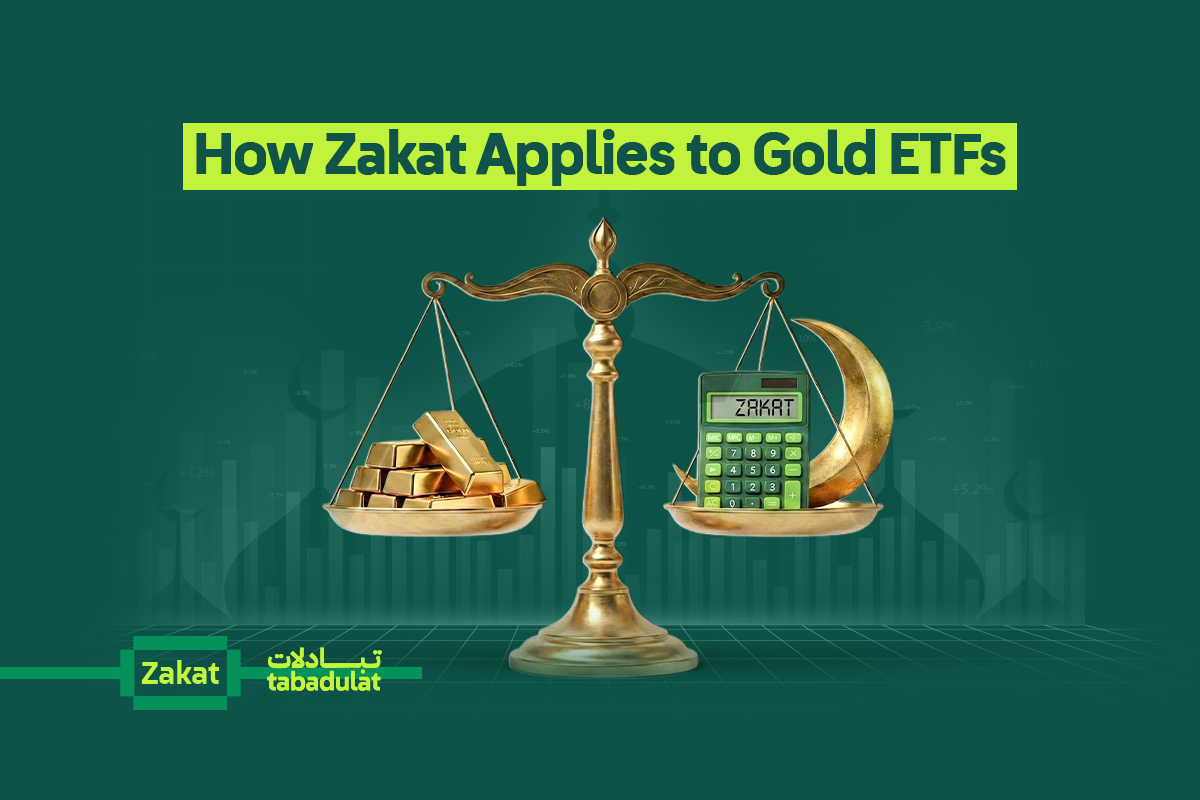
With the rise of digital investing, gold isn’t just a shiny bar in a safe anymore. Today, many Muslims invest in Gold-Backed ETFs, Exchange-Traded Funds that represent ownership in physical gold or gold-related assets. But while these modern instruments make investing easier, many investors wonder: Does Zakat apply to Gold ETFs? And if so, how do I calculate it? Let’s break this down clearly and simply.
What Is Zakat?
Zakat is one of Islam’s five pillars, a compulsory act of charity that purifies wealth and supports the needy and underprivileged. If a Muslim’s total wealth exceeds a certain threshold (called nisab) and has been held for a full lunar year (hawl), then 2.5% of that wealth must be given as Zakat.
Gold has historically been one of the primary measures for nisab because of its universal value. Muslims have paid Zakat on gold and silver for centuries, long before modern financial instruments existed.
What Are Gold ETFs?
A Gold ETF is a way to invest in gold through the stock market. You don’t physically hold the gold yourself; your shares represent a share ownership of the fund’s gold holdings.
Gold ETFs appeal to investors because they offer:
- Convenience, no storage or insurance concerns
- Liquidity, easy buying and selling at market prices
- Transparency, prices closely follow the global gold markets
Well-known examples include SPDR Gold Shares (GLD), iShares Gold Trust (IAU), alongside regional gold ETFs available in many markets. For Muslim investors, Gold ETFs provide a practical way to access gold while managing wealth digitally.
Invest with clarity and confidence.
Discover whether your chosen stock meets Shariah standards today: https://tabadulat.com/stocks
Is Investing in Gold Halal?
From a Shariah perspective, Shariah scholars consider gold investment Halal if it is under the supervision of its Shariah board. Islam recognizes gold as an asset, and people have historically used it as money and a store of value.
However, the structure of the investment determines its permissibility. A gold investment should:
- Avoid riba (interest-based returns)
- Involve clear, immediate ownership
- Be free from excessive uncertainty (gharar)
Some gold investment products may include leverage, derivatives, or interest-based mechanisms that make them non-compliant. That’s why understanding the structure of a gold ETF is essential, and the supervision of a Sharia Supervisory Board (SSB) is critical.
To learn more, read Tabadulat’s blog about whether gold investment is halal. We explain different types of gold investments and their Shariah rulings.
Do You Pay Zakat on Gold ETFs?
Yes. Most Islamic financial scholars and zakat guides agree that Gold ETFs are subject to zakat. This is because they represent ownership of gold or gold-related assets. The principle is similar to gold bullion or physical gold,it’s wealth held as an investment.
However, it’s important to understand which part of the ETF people consider zakatable. Since ETFs can hold different types of assets, like cash, stocks, or commodities, many experts suggest looking at the fund’s makeup.
- - If the ETF holds physical gold or gold-backed assets, treat it like owning gold bullion.
- - If it includes other non-gold assets, count only the portion that represents Zakat-eligible holdings.
In most cases, investors use the ETF’s current market value as the basis for Zakat calculation.
How to Calculate Zakat on Gold ETFs
Here’s a simple step-by-step method:
- Determine Nisab: The nisab for gold is based on 87.48 grams of pure gold. If your total zakatable assets equal or exceed this, Zakat is due.
- Zakat Date: Zakat will be due after a full lunar year once the Nisab has been reached.
- Calculate the Market Value: Multiply your Gold ETF share price by the number of shares you own to find the total value.
- Adjust for Zakatable Portion (if needed): If your ETF isn’t purely gold-backed, estimate the percentage that is zakatable.
- Apply the Zakat Rate: Multiply the zakatable value by 2.5% (or 0.025).
Example: You own $10,000 worth of a Gold ETF. If it’s 100% gold-backed, your Zakat due would be $250 (10,000 × 2.5%). If you deem only 80% zakatable based on holdings, you would calculate the due amount as $200.
Final Thoughts: Modern Wealth, Timeless Principles
Investing in Gold ETFs allows Muslims to join global markets without owning real gold. However, they still need to follow Islamic rules like Zakat. The underlying principle remains simple: wealth that can purify and benefit others should not just grow; it should circulate.
Paying Zakat on Gold ETFs combines modern finance with important Islamic values. This helps make sure your digital investments match your beliefs.
Soon, paying Zakat on Gold ETFs will not be complicated. Instead of manually tracking gold prices, calculating nisab, and figuring out 2.5%, you will be able to use Tabadulat’s Zakat Calculator, available in the app.
FAQS
Is there Zakat on Gold ETFs?
Yes. If your total wealth is more than the nisab (87.48 grams of gold), you must pay Zakat. This applies to the gold part of your ETF, based on its current market value.
Is Gold ETF Halal in Islam?
Generally, yes. Gold ETFs are halal if they do not involve interest or excessive speculation. They must also clearly show ownership of physical gold or Shariah-compliant gold assets, and it must be subject to the supervision of its sharia bored.
Can Muslims invest in ETFs?
Yes, Muslims can invest in ETFs if the fund is under the supervision of its Shariah board.
Is there Zakat on mutual funds?
Yes. Zakat may apply depending on the fund’s composition. Only the portion that represents zakatable assets, like cash or Shariah-compliant equities, calculates Zakat.
Can I sell Gold ETFs anytime?
Yes. Gold ETFs trade on stock exchanges like regular shares, so you can sell whenever the market is open. Keep in mind that the price may fluctuate daily.
How long should I leave my money in an ETF?
There’s no fixed duration. You can hold ETFs for the short or long term depending on your investment goals and market conditions, but prices may fluctuate daily.
This article is for educational purposes and does not constitute financial or investment advice. Readers should consult a qualified Shariah scholar and/or financial advisor before making investment decisions
Read more
Browse all articles

.avif)