


.svg)
.svg)
.svg)
.svg)
.svg)
Gharar and Maysir Explained: Principles Every Muslim Investor Should Know


Apr 5, 2026
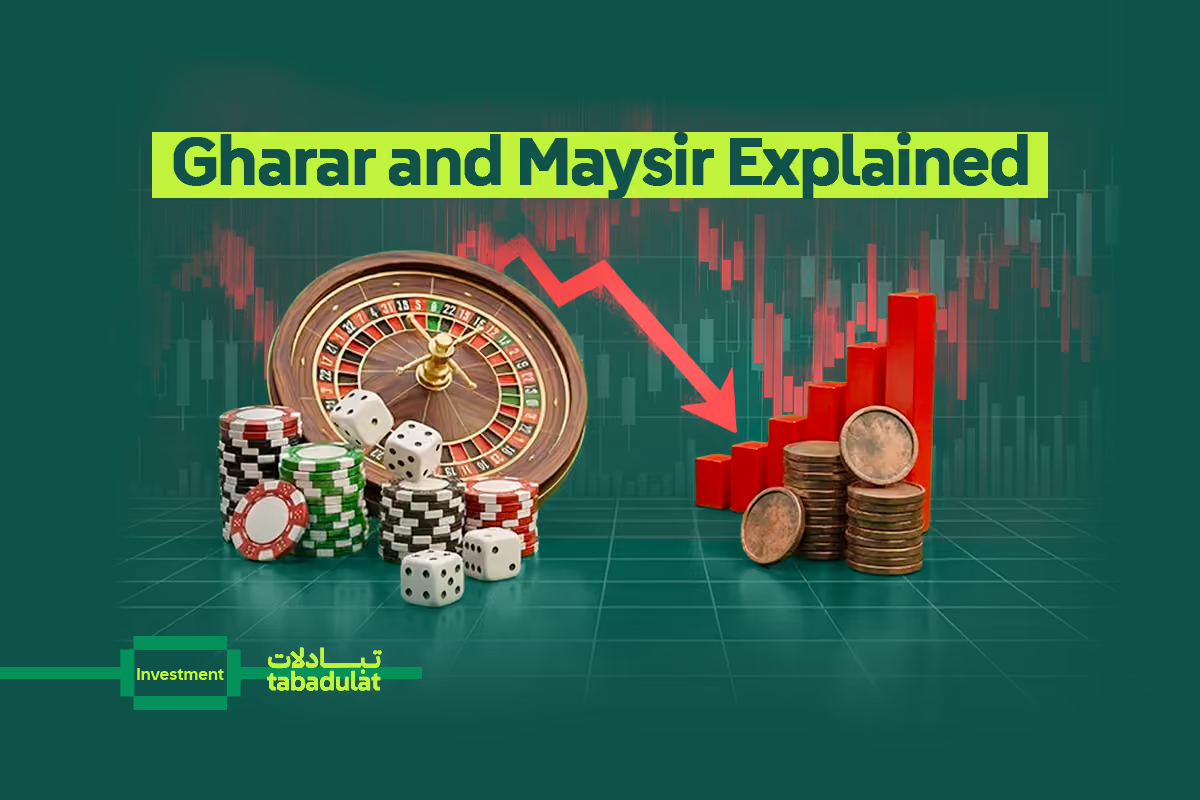
Modern financial markets offer countless opportunities, but not all transactions align with Islamic principles. Some investments may appear profitable on the surface yet involve elements that conflict with Shariah guidelines. Two important concepts every Muslim investor should understand are gharar and maysir.
These terms are often mentioned in Islamic finance discussions, but they can sound technical or abstract. In reality, their meanings are straightforward and closely tied to fairness, transparency, and responsible risk-taking.
With the right understanding, you can invest confidently while ensuring your financial decisions remain aligned with your values.
Understanding Risks Before You Invest
Islam encourages trade, investment, and wealth creation. However, it establishes ethical boundaries to ensure financial activities rest on justice and clarity.
Transactions that involve excessive uncertainty or gambling-like behavior can harm individuals and create instability in markets. This is why Islamic finance prohibits both gharar and maysir.
Avoiding them protects investors from unnecessary risk, prevents exploitation, and promotes genuine economic activity based on real assets and informed decisions.
Before entering any investment, it’s important to understand whether these elements are present.
What Is Gharar? (Excessive Uncertainty)
Gharar refers to excessive ambiguity or uncertainty in the terms or outcome of a contract.
In simple terms:
Gharar = entering a deal without clear information about what is being bought, sold, or delivered.
Islam permits normal business risk, but it forbids transactions where key details are unknown or hidden. This includes uncertainty about price, quantity, ownership, delivery date, or the existence of the asset itself.
Examples of gharar include:
• Selling something that the seller does not own
• Contracts with unclear terms or hidden conditions
• Buying assets that may not exist
• Highly speculative derivative contracts
Such uncertainty can lead to disputes, injustice, and unfair advantage for one party.
Islamic finance promotes transparency so both sides clearly understand their rights and obligations.
What Is Maysir? (Gambling and Speculation)
Maysir refers to transactions based only on chance. One party gains at another’s expense, without productive effort.
In simple words:
Maysir = earning money through games of chance rather than real economic activity.
It includes gambling in all forms, as well as speculative financial behavior that resembles betting rather than investing.
Examples of maysir include:
• Casino gambling and betting
• Lottery schemes
• Speculative day trading driven purely by price swings
• High-risk financial instruments structured like wagers
These activities create wealth transfers without generating real value, which contradicts Islamic principles of fairness and productivity.
Islam encourages investment based on being analytical, asset ownership, and shared risk, not luck or zero-sum games.
Key Difference Between Gharar and Maysir
While both are prohibited, they address different issues:
• Gharar relates to uncertainty and lack of clarity in contracts
• Maysir relates to gambling and chance-based gain
A transaction may involve one or both elements. For example, speculative derivatives can contain excessive uncertainty (gharar) and gambling-like risk (maysir).
Understanding this distinction helps investors evaluate modern financial products more carefully.
Why Gharar and Maysir Are Prohibited
Islamic finance aims to create a just and stable economic system.
Transactions involving excessive uncertainty or gambling-like structures often:
• Create an unfair advantage for one party
• Lead to financial disputes
• Encourage reckless risk-taking
• Generate wealth without real economic contribution
• Cause market instability
By prohibiting gharar and maysir, Islam promotes responsible investing built on transparency, asset ownership, and shared risk.
This ensures financial growth benefits both individuals and society.
Choose Investments Built on Clarity and Responsibility
Avoiding gharar and maysir begins with selecting financial products that follow Shariah principles. Investments built on transparency, clear contracts, and real economic activity help protect both your wealth and your values.
Verifying Shariah compliance before investing helps align your investments with Shariah principles and ethical considerations
Check the Shariah-compliant stocks here:
https://tabadulat.com/ar-ae/halalstockscreener
Final Takeaway: Investing with Purpose and Integrity
Understanding gharar and maysir helps Muslim investors make informed financial decisions rooted in Islamic ethics.
Islam encourages wealth creation but through transparency, fairness, and genuine economic contribution.
By avoiding excessive uncertainty and gambling-like speculation, your investments become more responsible, stable, and aligned with your faith.
With proper knowledge and trusted tools, Halal investing becomes a confident journey built on clarity and purpose.
Looking to align your investments with recognized Shariah standards?
Learn how AAOIFI guidelines define Halal stocks and how to apply them confidently here:
https://tabadulat.com/blog/aaoifi-standards-explained-what-makes-a-stock-halal
FAQs
1. How is gharar determined?
Gharar occurs when a contract or transaction contains excessive uncertainty about essential elements like price, quantity, quality, ownership, or delivery, creating potential injustice or disputes.
2. Example of gharar in daily transactions
Selling fish that haven’t been caught yet, or offering goods without specifying exact quality, quantity, or delivery terms, involves gharar because the buyer cannot fully know what they are purchasing.
3. Difference between maysir and qimar
Qimar refers specifically to gambling between parties on an uncertain outcome that involves taking ownership of some form of wealth (mal) by the winning party. Maysir is broader, covering all forms of gain by chance without productive effort.
4. Where is gambling prohibited?
Gambling is prohibited in Surah Al-Ma’idah (5:90).
5. Is gambling haram or shirk?
Gambling is haram (forbidden) in Islam, but it is not considered shirk.
This content is for educational purposes only and does not constitute financial, tax, or investment advice. Interpretations of Gharar and Maysir may vary depending on individual circumstances and scholarly views. Users are encouraged to consult qualified advisors before making financial or religious decisions.
أحدث المقالات المنشورة
تصفح جميع المقالات

.avif)