




Is Koninklijke Philips (PHG) stock Halal?
Verdict for Koninklijke Philips (PHG): not Shariah compliant (FAIL). Screened October 2026 under AAOIFI Shariah Standard No. 21. Business activity: pass. Non-permissible income: pass. Interest-bearing investments: pass. Interest-bearing debt: fail. Preference shares: pass. Dividend purification factor: not applicable. Next review: November 2026.
Koninklijke Philips is a prominent multinational corporation with a core focus on health technology. Having evolved from its roots in lighting and consumer electronics, the company now spearheads innovations in diagnostic imaging, image-guided therapy, and consumer health products. Philips is instrumental in the healthcare sector, providing integrated solutions that enhance patient care and operational efficiency in medical facilities worldwide. Before any of that matters to a Muslim investor, one question comes first: is Koninklijke Philips stock Halal?
Is Koninklijke Philips Shariah compliant?
No. In the October 2026 screening Koninklijke Philips (PHG) does not pass AAOIFI screening: it fails the interest-bearing debt screen. Healthcare rarely troubles the activity screen; treating illness is permissible work. For Koninklijke Philips, the AAOIFI Shariah Standard No. 21 verdict turns on the balance sheet instead: research is capital hungry, and interest bearing debt and investments must each stay below 30% of market capitalisation.
Does Koninklijke Philips pass the business activity test?
The activity screen is only part of the picture this month: Koninklijke Philips currently fails the interest-bearing debt screen, so the overall verdict is not compliant regardless of the business itself. Treating illness is permissible work; the scrutiny belongs to the financing behind it.
Is Koninklijke Philips' income Halal?
Yes, within AAOIFI's tolerance. Koninklijke Philips' income from non-permissible sources stays below 5% of revenue in the October 2026 screening.
Does Koninklijke Philips meet AAOIFI's debt and investment ratio requirements?
Not in full. Interest bearing debt currently exceeds the 30% cap, measured against a market capitalisation of $23.9B (market data as of 1 October 2026), while the other ratio stays within it. One breach is enough to fail the screening; the ratios are reassessed monthly under our Shariah Supervisory Board.
Why do other halal screeners show a different verdict for Koninklijke Philips?
Screeners can disagree without either being wrong. AAOIFI Shariah Standard No. 21, which Tabadulat applies, measures interest bearing debt and investments against market capitalisation with a 30% ceiling. MSCI and FTSE measure them against total assets with a 33% ceiling, and S&P and Dow Jones Islamic use a multi year average of market capitalisation. Data dates differ too, because each provider reads filings and prices on its own schedule. The same company can therefore pass one standard and fail another in the same month. Tabadulat publishes one answer, the AAOIFI result as of October 2026, and re-screens it every month.
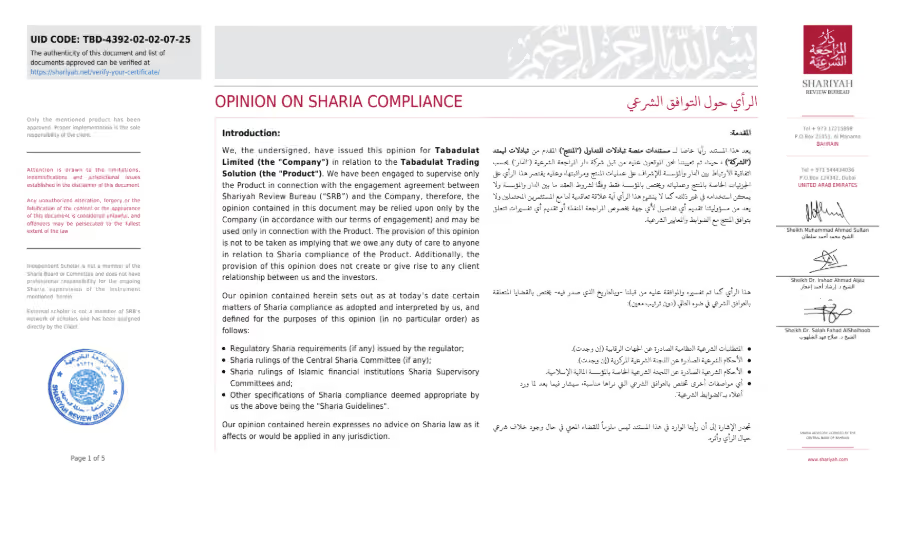
Tabadulat is an ADGM regulated brokerage whose license covers Shari'a Compliant Regulated Activities, as the FSRA permission names them. New to the terminology? Gharar and Maysir, Sukuk, Zakat and purification are all explained in plain English.
New to the screening method? Read What is Halal Investing? A Guide to Halal Stocks and Islamic Finance
Frequently asked questions
Is Koninklijke Philips (PHG) stock Halal to invest in?


How often is Koninklijke Philips (PHG) reviewed for Shariah compliance?
Does Koninklijke Philips (PHG) pass the AAOIFI non-permissible income screen?
Does Koninklijke Philips (PHG) pass the AAOIFI interest-bearing investments screen?
Does Koninklijke Philips (PHG) pass the AAOIFI interest-bearing debt screen?
What is the dividend purification factor for Koninklijke Philips (PHG) stock?
Does Koninklijke Philips (PHG) pass the AAOIFI preference share screen?