


Why sukuks surged 60% and why investors like you should care
Global ESG sukuk issuance rose more than 60% in 2025. Learn what sustainable sukuk are, how they differ from bonds, and what the growth means for investors.

Download the Tabadulat app and start building your Shariah-compliant portfolio in minutes.






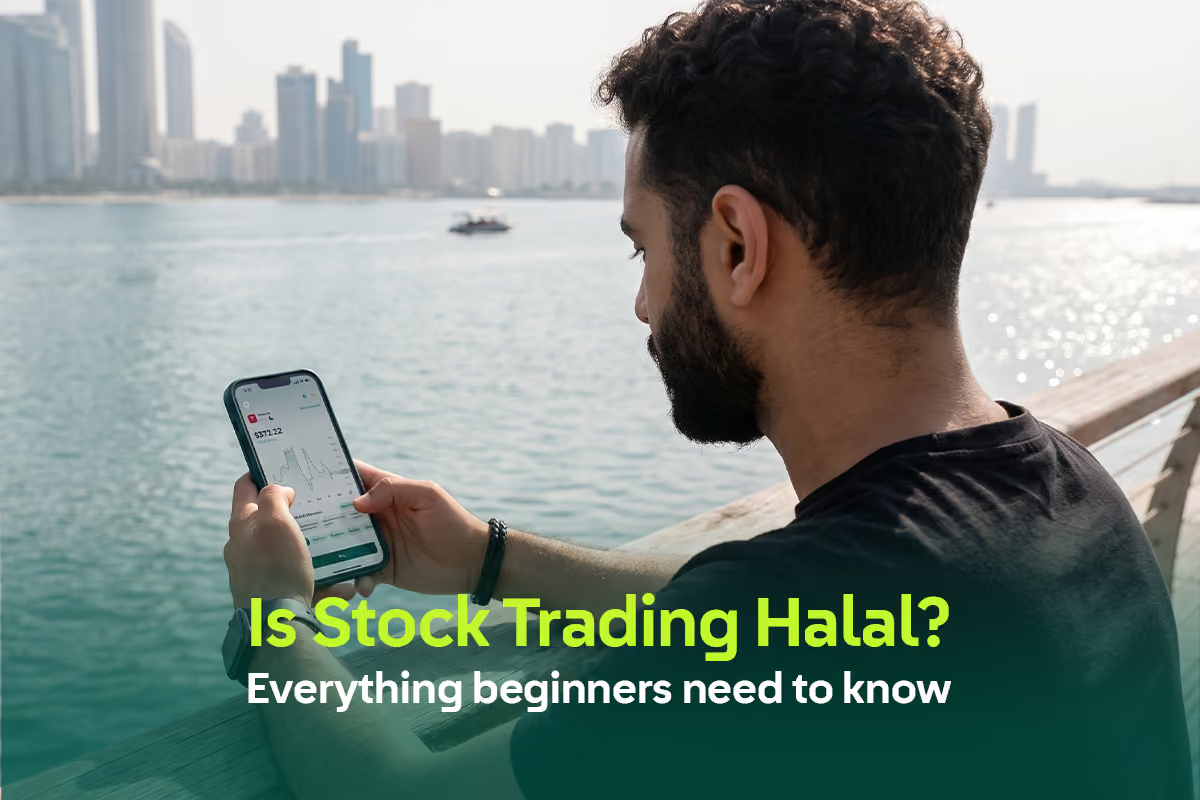
People's financial habits vary based on their individual goals and vision; however, some lack a specific plan or strategy for managing their money wisely. One evening, while with friends, I mentioned, as is my custom, that I follow the "50-30-20 rule" of income allocation, a method endorsed by financial experts and economists: 50% for essentials, 30% for luxuries and lifestyle enhancements, and 20% for investment. A friend asked how I invest my money and was shocked when I told him I trade stocks.
That was the question my friend asked with a look of surprise. I understood his astonishment, having encountered such inquiries throughout my professional life and studies. I had even recently heard someone claim that stock market trading is *haram* (forbidden) and that any money earned would lack *barakah* (divine blessing) because the returns are generated without one actually "working” and it may include a certain level of uncertainty.
To clarify the full picture, we must first understand what trading actually entails. Imagine, my friend, that you run a clothing manufacturing company and decide to expand by opening more factories in neighboring countries or launching a new footwear production line. What would you do? When you realize that your company's capital and personal savings are insufficient for expansion, you might consider borrowing, either from financial institutions like banks or from individuals. If you rule out the first option due to religious prohibitions against usurious interest or personal preference, you would turn to individuals. Here, you have two choices: borrow from people you know (such as relatives and friends) or from strangers (such as investors).
In the latter case, they become equity partners and share in the company's profits or losses. This leads to the concept of trading: your company issues shares totaling the required amount, subject to stock exchange regulations, and traders purchase them. By doing so, they become partners in the company proportional to their holdings, sharing in its gains and losses.
This financial model relies on analyzing the company's performance and financial records, such as financial statements and balance sheets. When you invest in the company, you effectively become a trader; your stake could grow significantly, potentially earning you a seat on the board of directors where you could make critical decisions.
Based on this principle of partnership, you can buy or sell company shares whenever you wish. Trading relies on market analysis and tracking share trends using smart tools and analytical expertise. If the market anticipates a drop in a company's share price, you should sell immediately to avoid loss; conversely, if you anticipate a rise, you should buy the stock to profit from its future appreciation, much like buying real estate in an area and selling it years later at a much higher price, profiting from the difference.
Now, given this explanation, do you still believe that trading is forbidden? The act of trading itself is 100% Halal (permissible), but certain conditions must be met to ensure this ruling applies:
The first condition is that the company's activities must be Halal and avoid prohibited sectors such as alcohol, gambling, and interest-based finance.
The second condition concerns financial ratios, in accordance with the standards of the Accounting and Auditing Organization for Islamic Financial Institutions (AAOIFI):
Where necessary, the "purification" process (cleansing income of non-compliant earnings) is generally calculated based on the income that does not align with Sharia principles, allocated per share.
This was the second question my friend considered after confirming that trading is Halal. He believed he would inevitably lose money trading on the stock market and asked me which winning stocks he should buy to avoid losses.
The truth is, no stock is a guaranteed winner or loser forever. I could recommend a fast-growing tech company, for instance, as it has generated significant gains driven by the AI revolution; however, I cannot guarantee it won't drop tomorrow or the day after because of a sudden decision affecting the stock or earnings falling short of market expectations. Therefore, when choosing the right stock, you should ask:
1-How does this company earn money?
A strong business sells products or services people actually need.
2-Is the company financially healthy? (Look at its revenues, profits, and assets.)
3-Does the industry and its products have a future?
4-How does it stand against competitors?
5-Is the price fair? One easy way to check is the P/E ratio (Price-to-Earnings), which tells you how much you pay for every dollar the company earns.
High P/E → stock is pricey
Low P/E → stock is cheap (if the company is strong)
Feeling lost or confused?
If you decide to trade but want to minimize risk, or lack the experience to manage a full portfolio yourself, invest in ETFs or mutual funds. These funds pool dozens or hundreds of stocks in a balanced way, managed by experts, reducing the risk of trading a single company's stock.
These funds are subject to the same criteria as individual stocks regarding business activities and financial ratios. Notable Sharia-compliant funds include SPUS, IGDA, ISDW, HLAL, ISDE, SPSK, WSHR, ISDU, SPRE, UMMA, SPWO, HIEU, SPTE, HIUS, and AMAP.
Want a trusted way to trade Halal? Download Tabadulat and start trading on US stocks and ETFS with zero commission
Is trading Halal in Islam?
Yes, trading can be Halal when you exclude prohibited sectors, provided Interest-bearing debt and Interest-earning investments does not exceed 30%, and non-compliant income does not exceed 5% of total revenue.
Can Muslims do online trading?
Certainly, Muslims can trade after verifying that the stock or asset is Halal, using platforms regulated by a recognised financial regulator and overseen by a Shariah Supervisory Board, such as Tabadulat (regulated by the ADGM FSRA).
.
Which online trading is Halal?
Many platforms allow Muslim investors to trade in a Halal way. One of the most prominent is the "Tabadulat" app, which lets investors trade in the US market without commission.
Is gold trading Halal?
Investing in gold is Halal provided it adheres to Sharia guidelines. The most important of these are actual ownership of the gold, full payment of the price, and taking possession without delay. Products involving usurious interest, margin trading, or those that do not confer actual ownership of the gold may not be Sharia-compliant.
Is 1% interest Halal?
No, charging or paying any amount of interest, including a 1% rate, is considered *riba* (usury) and is forbidden in Islam.
This article is for educational purposes and does not constitute financial or investment advice. Readers should consult a qualified Shariah scholar and/or financial advisor before making investment decisions
Regulated by the ADGM FSRA.Capital at Risk. Not Investment advice